Episode 20 – Dr. Russell Ross: The Dynamic Nature of Atherosclerotic Plaque
As an introduction to this article, it is important to remember that by the middle of the 20th century, it was already known that atherosclerotic plaque was responsible for the obstruction of coronary arteriesThe two coronary arteries, the right and the left, form the blood network that supplies the heart with oxygen and nutrients. They are located directly on the surface of the heart and branch into smaller vessels that and that its rupture could trigger a heart attack.
At that time, two major therapeutic approaches emerged. The first involved compressing the plaque to reopen the artery, while the second aimed to bypass the obstruction through coronary arteryThe two coronary arteries, the right and the left, form the blood network that supplies the heart with oxygen and nutrients. They are located directly on the surface of the heart and branch into smaller vessels that bypass surgery.
Over time, however, it became clear that these treatments did not cure the disease itself. They mainly relieved symptoms related to the obstructions, while the atherosclerotic disease remained present. The risk of acute cardiovascular events therefore persisted despite these interventions.
At the time, no one could truly answer the fundamental question: why do these plaques form?
Atherosclerosis remained a poorly understood phenomenon.
Two major hypotheses opposed one another:
one attributed its development to a progressive accumulation of cholesterolCholesterol is essential for the proper functioning of the human body, but it can also have harmful effects if present in excess. >> within the arterial wall
the other pointed instead toward an inflammatory process
A researcher fascinated by tissue repair
It was in this context that the work of Russell Ross would profoundly transform the understanding of atherosclerosis.
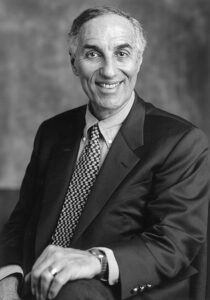
Born on May 25, 1929, in St. Augustine, Florida, he obtained a degree in dental medicine from the Columbia University College of Dental Medicine in New York in 1955. He later pursued studies in experimental pathology at the University of Washington in Seattle, where he earned his doctorate after several years of research.
He subsequently joined the Department of Pathology at the University of Washington, eventually becoming chairman of the department.
Dr. Ross became particularly interested in the mechanisms involved in wound healing.
His research led him to ask a fundamental question: could a process normally useful for healing, under certain circumstances, become the cause of disease?
In other words, could a mechanism designed to repair tissues also become harmful when activated inappropriately?
A discovery that transformed cardiology
His work led to a major discovery. The same cells involved in tissue healing were also found surrounding atherosclerotic plaques.
From this observation, Dr. Ross developed a revolutionary hypothesis: atherosclerosis was actually an inflammatory response of the arterial wall to cholesterolCholesterol is essential for the proper functioning of the human body, but it can also have harmful effects if present in excess. >> accumulation.
This discovery finally reconciled the two previously opposing theories.
Supporters of the lipid theory were partly correct, just as those emphasizing the central role of inflammation were also partly correct.
CholesterolCholesterol is essential for the proper functioning of the human body, but it can also have harmful effects if present in excess. >> accumulation became recognized as the trigger for the inflammatory reaction, and this entire process gradually led to the formation and progression of atherosclerotic plaque.
A dynamic and unstable disease
This new understanding would transform modern cardiology.
Atherosclerosis was no longer viewed as a simple passive cholesterolCholesterol is essential for the proper functioning of the human body, but it can also have harmful effects if present in excess. >> deposit, but rather as a dynamic, active, and evolving disease.
It became understood that a plaque could remain stable for years before suddenly becoming unstable and rupturing.
When rupture occurs, the plaque contents come into contact with circulating bloodBlood is composed of red blood cells, white blood cells, platelets, and plasma. Red blood cells are responsible for transporting oxygen and carbon dioxide. White blood cells make up our immune defense system. Platelets contribute to blood, immediately activating the coagulation process.
A clot — called a thrombus — can then rapidly form and partially or completely block the coronary arteryThe two coronary arteries, the right and the left, form the blood network that supplies the heart with oxygen and nutrients. They are located directly on the surface of the heart and branch into smaller vessels that.
This mechanism is responsible for the majority of myocardial infarctions.
The true enemy had finally been identified.
A lasting legacy
The work of Dr. Russell Ross profoundly influenced the modern understanding of cardiovascular disease.
It also paved the way for the development of new therapeutic strategies aimed not only at treating obstructions, but also at stabilizing atherosclerotic plaques and reducing vascular inflammation.
Dr. Russell Ross died on March 18, 1999, in Seattle, Washington.