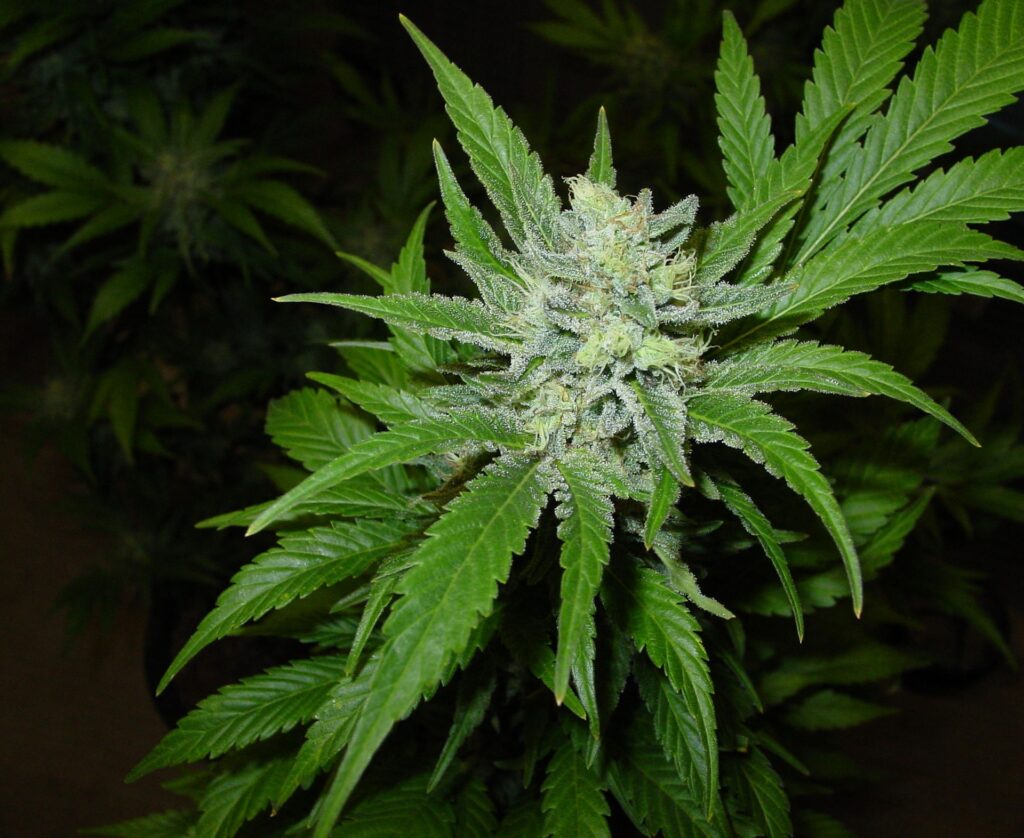
Cannabis is increasingly being legalized around the world, which contributes to normalizing its use. However, it is important to remember that what is legal is not necessarily risk-free or entirely safe.
Cannabis remains a widely used substance, whether for recreational or medical purposes. With legalization in several countries, its use has increased and it is often perceived as harmless. Yet, its effects on the heart and the cardiovascular system are real and deserve to be better understood.
Used for millennia
Cannabis has been used for centuries, even millennia. Initially, its use was primarily medicinal, to which a recreational use was gradually added.
Today, despite its legalization in several regions of the world, it remains the most commonly used illicit drug worldwide.
Its evolution in Canada
In Canada, cannabis was prohibited in the early 20th century (1923), which gradually put an end to its medical use within a legal framework.
Interest in its therapeutic applications resurfaced in the 1980s, particularly in relation to certain indications such as the relief of chronic pain, nausea associated with cancer treatments, and other medical conditions.
In 2015, the Liberal Party of Canada was elected with a commitment to legalize cannabis for recreational use. This promise was fulfilled on October 17, 2018, making Canada the second country in the world, after Uruguay, to legalize cannabis nationwide — and the largest country to do so.
Where do the effects of cannabis come from?
The human body naturally produces substances called endocannabinoids, whose role is similar to that of cannabis. They can be compared to small messengers that circulate throughout the body to transmit signals.
To receive these messages, many organs have receptors, somewhat like locks. When cannabis is consumed, its components can bind to these same receptors, like a key fitting into a lock.
This is how cannabis can influence various body functions, including the heart, the brain, and the nervous system.
The yin and yang of cannabis
It is interesting to note that two of the main components of cannabis can act in opposite ways, much like yin and yang. The most active substances are tetrahydrocannabinol (THC) and cannabidiol (CBD).
Tetrahydrocannabinol (THC)
THC is responsible for the main psychoactive effects of cannabis. It acts on several brain functions, including emotions, memory, appetite, and perception.
Its effects may include: a feeling of euphoria
impaired concentration and memory
anxiety, sometimes significant
an increase in heart rate (tachycardia)
In some cases, especially at high doses or in sensitive individuals, it may also cause episodes of mental disorganization or even psychotic symptoms.
Cannabidiol (CBD)
In contrast, cannabidiol (CBD) does not have notable psychoactive effects. It is often associated with more calming effects.
It is associated with: anxiolytic properties
potential antipsychotic effects
anti-inflammatory and pain-relieving properties
Its influence on the heart is generally more subtle, sometimes with a slight decrease in heart rate.
Different varieties, different concentrations
Different cannabis varieties contain varying proportions of THC and CBD. The effects experienced therefore depend on the balance between these two substances, as well as the dose consumed, the method of use, and each individual’s sensitivity.
The effect of smoked cannabis
Smoked cannabis acts much more quickly than when it is consumed orally. The effects usually appear within a few minutes after inhalation, whereas they may take up to 1 to 2 hours when it is ingested.
After consumption, a sequence of phases is often described:
the “buzz”: a sensation of lightheadedness or dizziness
the “high”: euphoria, disinhibition, easier laughter
the “stone” state: a feeling of calm and relaxation, sometimes drowsiness
the “come down”: a gradual return to the usual state
The intensity and duration of these phases vary from one person to another, depending on the dose, the THC concentration, and individual sensitivity.
Slower action of ingested cannabis
For some individuals, ingesting cannabis (foods, beverages, edible products) may seem like a “safer” option than inhalation. However, regardless of the form used, the effects of cannabis on cardiovascular health remain present.
When cannabis is swallowed, it must first pass through the digestive system before reaching the bloodstream. This process is slower than with inhalation.
As a result, the effects may appear after 1 to 2 hours, compared to just a few minutes when it is inhaled.
This delay can create a trap: if the effects are not felt quickly, a person may be tempted to consume more. When the effects finally occur, the amount absorbed may be too high, leading to an overdose and sometimes pronounced adverse effects.
Elimination from the body
Cannabis is gradually eliminated from the body. One portion is excreted in the urine, and another in the stool.
To better understand how quickly it disappears, the concept of “half-life” is often used. This refers to the time required for the amount of a substance in the body to be reduced by half.
In the case of cannabis, this concept is somewhat unique. THC, the main active component, tends to be stored in fatty tissues, where it can be released slowly over time.
It is estimated that about 20 to 30 hours are needed for the amount present in the body to be reduced by half. However, because some of it is stored and then gradually released, traces may persist for several days, or even longer in regular users.
The effect of cannabis smoke on the cardiovascular system
To date, no death has been attributed to a direct overdose of cannabis. However, this does not mean that its use is without risk, particularly for the cardiovascular system.
The effects of inhaled cannabis on cardiovascular health can be divided into two aspects.
The first is related to combustion. The effects of cannabis smoke are, in many respects, comparable to those of tobacco smoke. It is useful to recall that, in the case of tobacco, dependence is linked to nicotine, but it is mainly the products of combustion that cause harm.
Cannabis smoke contains several harmful substances, including:
tar
carbon monoxide
various carcinogenic compounds
Some studies suggest that cannabis smoke may contain high concentrations of these substances, sometimes higher than those found in tobacco smoke. In addition, the absence of a filter and the tendency to inhale deeply and hold the smoke increase the lungs’ exposure to these toxic substances.
The higher combustion temperature of cannabis may also further irritate the airways, contributing to local inflammation.
The direct impact of cannabis on the cardiovascular system
Cannabis acts primarily on the nervous system, but its effects also directly affect the heart and circulation.
One of the best-documented effects of THC is the increase in cardiac workload, reflected by an elevation in heart rate and bloodBlood is composed of red blood cells, white blood cells, platelets, and plasma. Red blood cells are responsible for transporting oxygen and carbon dioxide. White blood cells make up our immune defense system. Platelets contribute to blood pressure.
Increased cardiac workload
After consumption, THC generally leads to:
an increase in heart rate (on average about 10 to 20 beats per minute)
an increase in systolic bloodBlood is composed of red blood cells, white blood cells, platelets, and plasma. Red blood cells are responsible for transporting oxygen and carbon dioxide. White blood cells make up our immune defense system. Platelets contribute to blood pressure (approximately 5 to 10 mmHg)
In some cases, especially when standing or in certain individuals, a drop in bloodBlood is composed of red blood cells, white blood cells, platelets, and plasma. Red blood cells are responsible for transporting oxygen and carbon dioxide. White blood cells make up our immune defense system. Platelets contribute to blood pressure may occur, causing dizziness or even fainting (vasovagal or orthostatic syncope). See also:Fainting (syncope)
These manifestations are most often transient, but they may be accompanied by an increased demand for oxygen by the heart. This situation can become problematic in the presence of underlying cardiovascular disease.
What are the potential risks?
In a healthy individual, these effects are usually well tolerated. However, certain situations may involve risks:
palpitations“Palpitation” is a symptom related to an abnormality in heartbeats. There are several types of arrhythmias. This term is like a surname that encompasses several first names. or heart rhythm disturbances (arrhythmias)
an increased risk of heart attack, particularly within the hour following use
worsening of angina (chest pain)
possible interactions with certain medications
The risk varies depending on several factors: the dose, the THC concentration, the method of use (smoked, vaporized, or ingested), and individual sensitivity.
Impact on cardiovascular events
Some studies have shown that the risk of cardiac events, particularly heart attack, may be increased by approximately 4 to 5 times within the hourfollowing cannabis use, especially when it is inhaled.
For comparison:
an episode of intense anger may increase this risk by about 2 to 3 times
cocaine use may increase it much more significantly, up to 20 times or more
In regular users, the additional absolute risk remains relatively low, but it adds to the other existing risk factors. It can be compared to “adding fuel to the fire.”
Cannabis and cardiovascular disease
In individuals with heart disease or risk factors (hypertension, diabetes, high cholesterolCholesterol is essential for the proper functioning of the human body, but it can also have harmful effects if present in excess. >>), caution is advised.
Cannabis may:
increase the heart’s oxygen demand
alter heart rhythm
worsen existing symptoms
In these situations, it is advisable to discuss it with a healthcare professional.
Cannabis use in individuals with a history of cardiovascular events
In individuals who have already experienced a cardiovascular event — such as unstable angina or a heart attack — cannabis use is associated with an increased risk of complications.
Some studies suggest that, in these individuals, regular cannabis use may be associated with an increased risk of mortality in the years following the initial event. This risk appears to vary depending on the frequency of use, but the data remain variable and must be interpreted with caution.
In general, cannabis use may:
increase cardiac workload
promote certain heart rhythm disorders
increase the risk of cardiovascular events
In addition, an association has also been reported between cannabis use and an increased risk of stroke, although the data are still evolving.
Cannabis with increasing THC concentration
Over the years, the THC content of cannabis products has increased significantly. While it was around 2 to 4% in the 1980s, it had already reached approximately 10 to 15% in the early 2010s. Today, some preparations may contain even higher concentrations.
This increase is often accompanied by an imbalance with cannabidiol (CBD), whose proportion tends to decrease. This higher THC ratio may lead to more pronounced effects, both neurologically and cardiovascularly.
Possible interactions with medications
Cannabis may also interact with certain prescribed medications. It can alter their effectiveness by increasing or decreasing their effects.
These interactions particularly involve medications acting on the heart, bloodBlood is composed of red blood cells, white blood cells, platelets, and plasma. Red blood cells are responsible for transporting oxygen and carbon dioxide. White blood cells make up our immune defense system. Platelets contribute to blood pressure, or the nervous system. Special caution is therefore required, especially in the presence of chronic disease.
An evolving field
With the regulation of cannabis and the increase in its use, knowledge about its effects continues to grow.
Further studies will help better understand its long-term impacts, particularly on the cardiovascular system, depending on the different forms of consumption.
Legal does not mean risk-free
In this context, caution remains essential. The fact that cannabis is authorized does not mean that it is risk-free or entirely safe.
In individuals with a history of heart disease or risk factors (hypertension, diabetes, high cholesterolCholesterol is essential for the proper functioning of the human body, but it can also have harmful effects if present in excess. >>), it is generally recommended to exercise caution, reduce use, or even abstain.
A discussion with a healthcare professional helps assess individual risk and adapt recommendations.
In conclusion
Cannabis is now widely accessible and increasingly used. Its effects are often perceived as harmless, but they can have real consequences on the heart and the cardiovascular system.
Even though the risks vary from one individual to another, they should not be underestimated, especially in the presence of risk factors or heart disease.
An informed, cautious use adapted to one’s condition remains essential.