responsible for the obstruction of coronary arteriesThe two coronary arteries, the right and the left, form the blood network that supplies the heart with oxygen and nutrients. They are located directly on the surface of the heart and branch into smaller vessels that and that its rupture could trigger a heart attack.
At that time, two major therapeutic approaches emerged. The first consisted of compressing the obstruction in order to reopen the artery, while the second aimed to bypass the diseased area through coronary arteryThe two coronary arteries, the right and the left, form the blood network that supplies the heart with oxygen and nutrients. They are located directly on the surface of the heart and branch into smaller vessels that bypass surgery.
Over time, however, it became clear that these treatments did not cure the disease itself. They mainly relieved symptoms related to arterial blockages, while the atherosclerotic disease remained present. The risk of acute cardiovascular events therefore persisted despite these interventions.
One major question remained unanswered: how could physicians directly target the cause of the disease itself, namely the development of atherosclerotic plaques?
Gradually, certain observations attracted researchers’ attention. In particular, it became apparent that a diet rich in cholesterolCholesterol is essential for the proper functioning of the human body, but it can also have harmful effects if present in excess. >> seemed to promote the development of disease within the arteries.
A young researcher fascinated by nature
It was in this context that Akira Endo entered the scene.
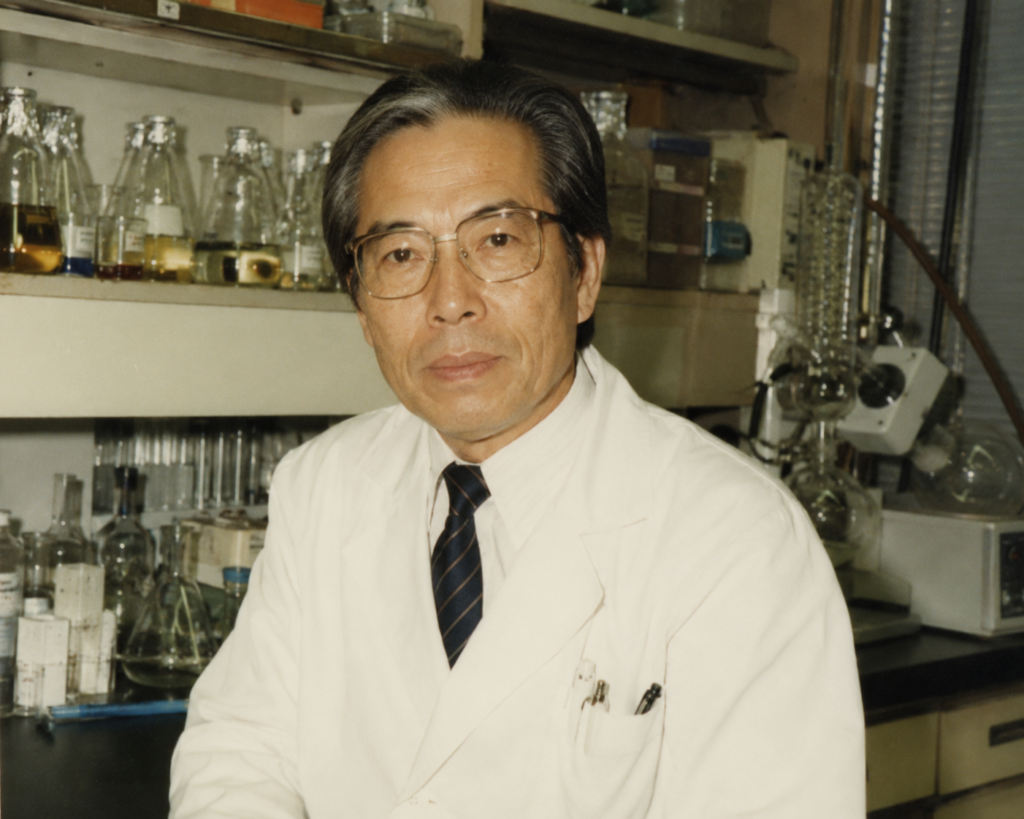
Born in Japan in November 1933, his interest in science began at a very young age through the influence of his grandfather, who introduced him to the wonders of nature.
One experience in particular left a lasting impression on him. Together, they observed a fungus capable of killing flies while remaining harmless to humans.
This discovery would profoundly influence his scientific future and guide him toward a career in biochemistry.
In Japan, Akira Endo became a biochemist at the chemical company Sankyo in Tokyo.
His early work later allowed him to pursue research for two years at the Albert Einstein Medical College in New York.
Searching for a way to block cholesterol
Endo’s research focused mainly on lipid metabolism — in other words, fats.
At that time, a true revolution was taking place in cardiac surgery. Surgeons began using the left internal mammary artery — an artery located beneath the chest wall — for coronary bypass surgery instead of using veins taken from the leg.
This innovation sparked his interest in atherosclerosis. He wanted to find a way to block the production of cholesterolCholesterol is essential for the proper functioning of the human body, but it can also have harmful effects if present in excess. >>.
Researchers already knew that part of the cholesterolCholesterol is essential for the proper functioning of the human body, but it can also have harmful effects if present in excess. >> circulating in the bloodBlood is composed of red blood cells, white blood cells, platelets, and plasma. Red blood cells are responsible for transporting oxygen and carbon dioxide. White blood cells make up our immune defense system. Platelets contribute to blood came from food, but that nearly two thirds were produced by the liver. It was therefore on this organ that he concentrated his efforts.
He returned to the idea inspired by the fungus he had observed in childhood. His hypothesis was bold: certain natural substances might be capable of blocking cholesterolCholesterol is essential for the proper functioning of the human body, but it can also have harmful effects if present in excess. >> production.
The discovery of statins
Experiments multiplied. Thousands of substances were analyzed. Failures were numerous, but they fueled his determination.
Then came a major breakthrough. He identified a substance belonging to the statin family, a class of medications that would transform the treatment of coronary arteryThe two coronary arteries, the right and the left, form the blood network that supplies the heart with oxygen and nutrients. They are located directly on the surface of the heart and branch into smaller vessels that disease.
Ironically, this substance originated from a fungus belonging to the Penicillium family.
History presents a fascinating parallel. Penicillin, discovered decades earlier, had dramatically reduced deaths caused by infections, which at the time represented the leading cause of mortality.
As infectious diseases declined, coronary arteryThe two coronary arteries, the right and the left, form the blood network that supplies the heart with oxygen and nutrients. They are located directly on the surface of the heart and branch into smaller vessels that disease gradually became the leading cause of death in industrialized countries.
Statins would, in turn, profoundly change this reality.
Mevastatin: a discovery initially overlooked
In the 1970s, Endo named his first molecule “mevastatin.” This medication lowered LDL cholesterolCholesterol is essential for the proper functioning of the human body, but it can also have harmful effects if present in excess. >> — often referred to as “bad cholesterolCholesterol is essential for the proper functioning of the human body, but it can also have harmful effects if present in excess. >>” — by 20 to 35%.
The Sankyo company obtained the rights to the discovery in 1974, and the first scientific results were published in 1976.
That same year, Endo presented his work at an international symposium in Philadelphia dedicated to drugs affecting lipid metabolism.
Surprisingly, few participants seemed truly interested in the discovery.
Despite this, he continued his work
Remarkable results
Not far from the Sankyo laboratories, Dr. Akira Yamamoto was treating patients with familial hypercholesterolemia, a rare inherited condition causing extremely high cholesterolCholesterol is essential for the proper functioning of the human body, but it can also have harmful effects if present in excess. >> levels.
He asked Endo to provide him with this new medication.
After adjusting the dosage, the results proved remarkable.
Endo then convinced Sankyo to conduct a clinical study documenting the cholesterolCholesterol is essential for the proper functioning of the human body, but it can also have harmful effects if present in excess. >> reduction, something that had never before been rigorously demonstrated.
However, the company gradually excluded him from the project before ultimately dismissing him. Mevastatin would never be commercialized by Sankyo.
The arrival of Merck
The story could have ended there.
However, an American scientist named Roy Vagelos, recently appointed president of the pharmaceutical company Merck, became very interested in Endo’s work.
Familiar with the mechanisms involved in cholesterol production by the liver, he quickly understood the tremendous potential of this discovery.
An agreement was eventually signed between Sankyo and Merck. The document reportedly consisted of only a single page.
Merck obtained the scientific data and the rights to future statin-related research, although mevastatin itself remained the property of Sankyo.
Endo later contributed to the development of a related product: lovastatin.
A revolution in cardiology
Merck subsequently continued the development of several other statins.
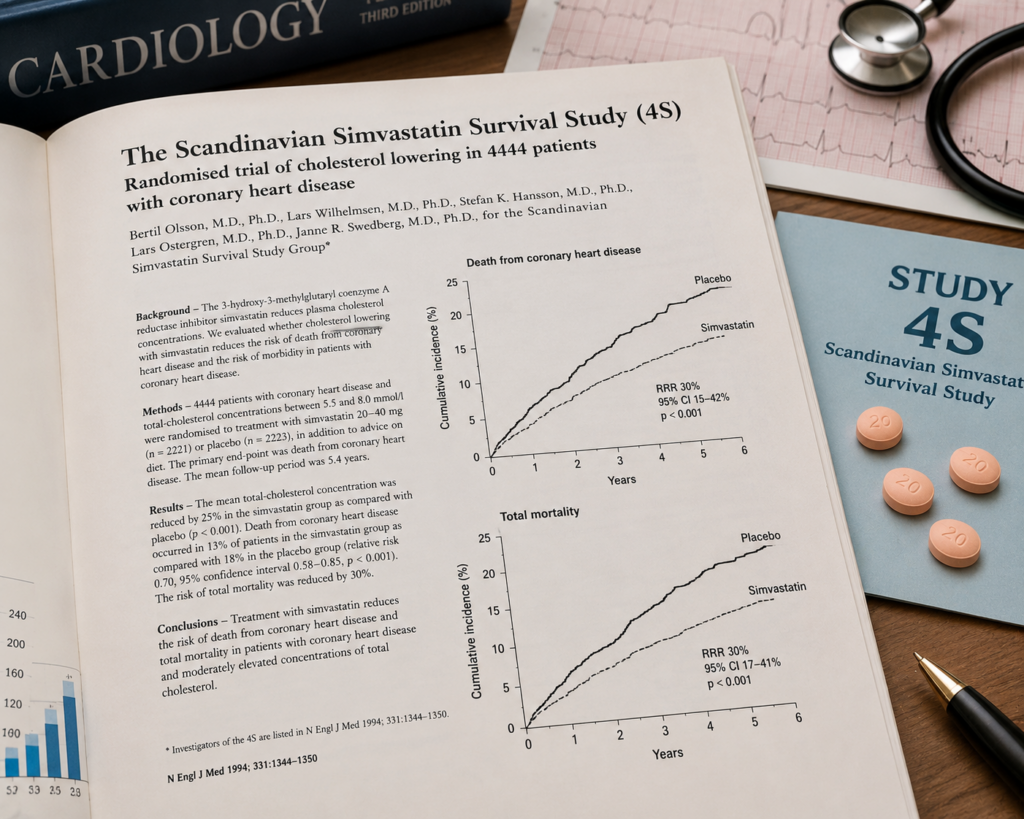
In 1994, nearly 18 years after Endo’s initial presentation in Philadelphia, an important Scandinavian study was published: the Scandinavian Simvastatin Survival Study, better known as the 4S study.
This study demonstrated that lowering cholesterolCholesterol is essential for the proper functioning of the human body, but it can also have harmful effects if present in excess. >> by approximately 35% in patients with coronary arteryThe two coronary arteries, the right and the left, form the blood network that supplies the heart with oxygen and nutrients. They are located directly on the surface of the heart and branch into smaller vessels that disease could significantly reduce heart attacks and cardiovascular mortality.
The publication permanently transformed modern cardiology.
Statins became one of the most important therapies in cardiovascular prevention.
Recognition at last
As a small anecdote, in 1994 Endo visited his physician and learned that his own cholesterolCholesterol is essential for the proper functioning of the human body, but it can also have harmful effects if present in excess. >> level was elevated. His doctor then reassured him by explaining that an excellent treatment for this problem now existed.
Over the years, Akira Endo received numerous scientific honors.
In 2008, he was awarded the prestigious Lasker-DeBakey Clinical Medical Research Award for his lifetime achievements.
Several recipients of this award later went on to receive the Nobel Prize.
History will remember that a researcher fascinated by fungi helped transform the treatment of cardiovascular disease throughout the world.