The implantation of a pacemaker (often called a cardiac pacemaker) or an implantable cardiac defibrillator requires long-term follow-up to ensure proper functioning of the implanted device and all of its components.
Clinic organization
Clinics dedicated to the follow-up of cardiac stimulation and defibrillation devices are usually located in hospitals or, in some cases, in specialized medical offices.
They are supervised by cardiologists or other healthcare professionals with specific training in this field and are supported by technologists specialized in the evaluation and programming of these devices.
Role of the clinic
The primary mission of these clinics is to provide regular follow-up for individuals living with an implantable cardiac device. Depending on the type of device, periodic evaluations—most often every 3 to 6 months—make it possible to assess:
battery status,
the integrity of the leads placed in the heart and connected to the device,
the possible presence of arrhythmias (heart rhythm disturbances),
as well as technical parameters that may influence the optimal performance of the system.
A complement to cardiology follow-up
Pacemaker and defibrillator follow-up clinics do not replace regular cardiology consultations or the care provided by the treating physician.
Given the large number of individuals followed, visits are primarily focused on the assessment of the implanted device itself.
Other aspects of cardiovascular health should be addressed during routine cardiology appointments or with the healthcare professional responsible for overall medical care.
Appointment scheduling
All visits are scheduled by appointment to ensure efficient and safe organization.
An initial appointment is usually planned at the time of implantation to organize postoperative follow-up. Thereafter, during regular device checks, the clinic contacts the individual directly to arrange the date and time of the next evaluation.
How follow-up is carried out
Follow-up can be performed in person or remotely, depending on the type of implanted device. More recent models make it possible to reduce the number of clinic visits through remote monitoring, providing faster access to device data in the event of a potential issue.
1️⃣ In-person follow-up
At a first visit to a new clinic, it is recommended to bring the device identification card, which contains important information about the brand and model of the implanted system.
For each appointment, it is also advisable to have an up-to-date list of medications, to facilitate assessment if needed.
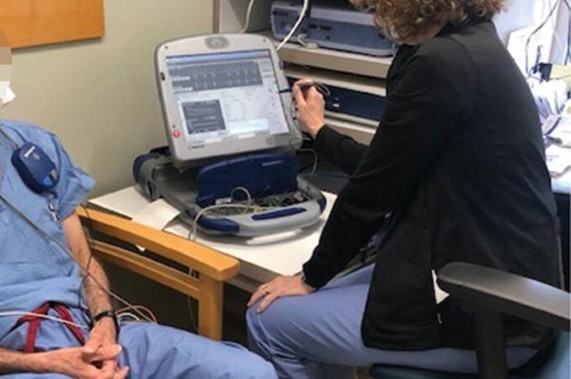
During follow-up, a small sensor is placed over the area where the pacemaker or defibrillator is located. This sensor establishes communication between the implanted device and an interrogation unit (a small computer). The physician or technologist can then access the technical data required to verify proper functioning of the pacing or defibrillation system.
This procedure is simple, painless, and usually lasts between 5 and 10 minutes.
Mild palpitations“Palpitation” is a symptom related to an abnormality in heartbeats. There are several types of arrhythmias. This term is like a surname that encompasses several first names. may occur
During interrogation, certain tests may cause brief sensations of faster or slower heartbeats. This is a normal phenomenon, used to assess the performance of the device and its electrical components.
A short questionnaire may also be completed to document important elements, including:
the presence of recent symptoms,
an episode of loss of consciousness,
the perception of palpitations“Palpitation” is a symptom related to an abnormality in heartbeats. There are several types of arrhythmias. This term is like a surname that encompasses several first names..
2️⃣ Remote follow-up
Technological advances now allow a significant portion of follow-up to be performed directly from home.
A transmission unit, provided at the time of implantation or during the first clinic visit, sends data from the implanted device to the follow-up team. With these systems, in-person visits become less frequent, often spaced every 12 to 24 months rather than every 3 to 6 months.
Clinic staff have access to the same technical information as during an in-clinic interrogation. Tests are performed automatically, often during the night, making them generally imperceptible.
If a potential problem is detected, the clinic contacts the individual being followed—usually during regular business hours—to gather additional information or arrange an in-person evaluation. Device reprogramming, for example, can only be performed in the clinic.
Between scheduled follow-ups, the system may also transmit alerts related to technical issues or the occurrence of arrhythmias, when necessary.
Ongoing communication
Whether follow-up is conducted in person or remotely, it is important to contact the clinic to report any significant information, such as sudden loss of consciousness or the delivery of shock therapy in the case of a defibrillator.
Aspects assessed during follow-up
A) Comprehensive device function check
The evaluation performed in the clinic makes it possible to assess several essential elements, including:
battery longevity,
the condition of the lead(s) (wires placed in the heart and connected to the device),
the quality of communication between the implanted device and the heart muscle,
proper functioning of the internal circuits,
the possible presence of arrhythmias (heart rhythm disturbances).
These checks ensure that the pacing or defibrillation system is operating in a stable and safe manner.
B) Possible technical adjustments
Depending on the results obtained, certain settings may be modified by the professional responsible for follow-up. These adjustments aim to optimize device performance or extend battery life.
All changes are made on site, as no reprogramming can be performed remotely.
C) Recording of the heart’s electrical activity
The devices store the heart’s electrical activity since the last evaluation. These data make it possible to identify relevant events, such as the occurrence of arrhythmias, which may be associated with symptoms such as palpitations“Palpitation” is a symptom related to an abnormality in heartbeats. There are several types of arrhythmias. This term is like a surname that encompasses several first names., dizziness, or loss of consciousness.
End of the visit
Once the evaluation is completed, the interval before the next appointment is specified. A follow-up report may be sent to the treating physician, if needed, to ensure coordinated and comprehensive care. The visit then comes to an end.
Informing another physician
A copy of the results can be sent to another physician upon request. Simply provide the name and contact information of the healthcare professional to the appropriate staff. This request can be made at any time.
Important updates
It is recommended to inform the follow-up clinic of any change of address or telephone number. This information is essential to ensure receipt of appointment notices, follow-up reminders, or important communications related to the implanted device.
Situations requiring prompt medical attention
Certain situations warrant timely evaluation. The clinic should be notified in the following cases:
Following implantation
persistent fever after the procedure,
shortness of breath that gradually worsens,
any unusual change at the implantation site, including:
suspicious discharge or bleeding,
increasing swelling or the appearance of a lump,
redness, warmth, or increasing pain.
At any time
sudden loss of consciousness,
an electrical shock delivered by a defibrillator,
an audible signal or a vibration coming from the implanted device,
a brief electrical sensation felt at the site of the implanted device.
What do audible alerts or physical sensations related to the device mean?
1️⃣ Audible alerts or vibrations
(mainly observed with implantable defibrillators)
Some devices are programmed to emit a sound or vibration when a specific event is detected.
Indication of a potential problem A beep, tone, or vibration may signal a technical issue (for example, a change in battery status, a connection that needs to be checked, or a parameter outside the normal range). These alerts prompt contacting the clinic for a timely device check.
Electromagnetic interference In some situations, strong magnetic interference may temporarily trigger an alert. Moving away from the source is often sufficient to stop the signal. Nevertheless, a device check is still recommended.
2️⃣ Unusual sounds or physical sensations
(rare, generally associated with certain models or older devices)
“Ticking” or clicking sensation This may correspond to the mechanical perception of the electrical impulse generated by the device during cardiac stimulation. It can sometimes be felt near the chest, particularly during exhalation.
Possible origin These sensations may arise from the leads placed in the heart or from the device itself when it delivers stimulation. They are usually benign but should be reported to the clinic to confirm their origin.
3️⃣ Unusual electrical sensations
Brief sensations described as small electrical shocks felt near a pacemaker can have several causes.
or sensory perceptions originating from the nervous system.
Medical evaluation is therefore indicated to determine whether the phenomenon is benign or reflects a device malfunction requiring intervention.
In conclusion
Pacemaker and defibrillator clinics play a central role in the management of implantable cardiac devices.
Through structured follow-up—either in person or remotely—they help ensure proper device function, allow early detection of abnormalities, and enable adjustment of settings over time.
This specialized follow-up complements overall medical care and contributes to patient safety and continuity of care.